Monday, 13 January 2020

Film Review - 1917

Here we go. One of my most anticipated films of the year, and it’s being released in the dumping ground of the middle of January. It almost seems too perfect. We have a film that looks like it’s going to generate some real buzz from UK audiences out in cinemas at a time where there is nothing to compete with it. Of course, as a cinema goer it’s annoying that there’s nothing else new coming out, but, if the hype is to be believed, this film is something special. And to explain why I’m looking forward to this film so much, I will need to discuss a war film that came out a few years ago. 

In July 2017, Christopher Nolan brought us Dunkirk, a furiously raw and bleak take on one of the key turning points in World War II, and ended up being a film I admired rather than loved. It fell in a wired middle ground for me between being too colourless and bleak to be able to get properly invested in, but also the narrative required us to have some kind of feeling towards the characters for it to properly work, and when Tom Hardy spends pretty much his whole role struggling to emote from behind a constrictive mask, connecting with those characters can be difficult. The narrative is certainly satisfying and it’s glorious from a structural standpoint, but it didn’t quite work for me for reasons I struggled to articulate at the time. 

1917 looks set to provide the counterpoint to Dunkirk that I’ve been looking for for the past two and a half years. And, make no mistake, the film looks amazing. I think we might have an early contender for film of the year. In other words, I was looking to see the film the day it finally gets that wide release and see whether it lives up to my sky-high expectations. So, is it as good as I’d hoped? 

Yes. Not only did this film exceed my expectations, it might just go down as a genre defying classic. Every war movie made from this point is going to be compared to 1917 (and maybe even some that came before), and it is a masterpiece without comparison. I almost feel bad for even comparing this film to Dunkirk in my preamble, because the comparison hardly seems fair. Sure, Christopher Nolan might have had a solid grasp of the fundamentals that make up a solid war movie when he made Dunkirk, but director of 1917 Sam Mendes understands the key thing that Nolan was missing. The understanding that to make a great war movie you don’t need to compromise the human core. Dunkirk was a good film, but it felt stone cold. 1917 on the other hand, despite its murky tones and just as heavy themes, still grounds its narrative in real humanity, that being the relationship between two brothers, the younger of whom has been tasked, along with a colleague, to rescue sixteen hundred soldiers, including his older brother, who are walking into a trap after an orchestrated retreat by the Germans. Not only is it a well written narrative, but there are real relationships here that elevate them further. 

But the characters and how clearly and effectively they are both sketched out accounts to almost nothing in the grand scheme of things, especially in comparison to the technical achievement that this film is. Whoever had the one take idea is a genius. I don’t know if Sam Mendes himself had the idea to tell the story in that way, but whoever did deserve all the credit in the world. And it links into the central idea of the film. Everything about it is engineered to create a bleak atmosphere, and the one-shot approach is only half the story there. I am in awe of the team that worked on the set design and lighting for the shots when Schofield arrives in Ecoust, and the acting is second to none, with George MacKay acting like his life depended on it. I believed every moment of MacKay’s performance. It had me in tears both times I saw it by the end. There is a belief and a commitment and an understanding of war that, once again, is not so cold hearted to neglect the human element that comes through in MacKay’s performance that is damn near transcendent. There is blood, metal, brutal gunfire and a whole lot of fire in this movie, and the diegetic sound that beautifully compliments the framing of every moment draws attention to every little detail of the brutality of war so expertly that it’s hard to believe that this film was constructed by people rather than just existing independently of everything. 

It’s nothing short of extraordinary, and I haven't even got to talking about the drop-dead gorgeous cinematography. The wide low-level tracking shots as Schofield and Blake negotiate their way though no man's land are chill inducing, the wide shot of Schofield entering Ecoust is one of the greatest things I’ve ever seen on a screen, and the camera movement is consistently seamless, especially in the few instances the camera pans. One of the most inspired choices in the cinematography in this film is the use of handheld camera. Sure, there are plenty of still shots, especially as Schofield is in a state of mourning his colleague in the film’s opening act, but the camera is never planted and properly still. Just when you thought the film wasn’t technically ambitious enough. And this unsettled choice of camera technique only elevates the film further, highlighting the uncertainty of the characters about their future, made all the more tragic by the circumstances in which Blake has his life ended after the pair negotiated the German front line. After a German plane crashes in front of them, Blake attempts to help the injured pilot, even as Schofield suggests putting him out of his misery. Blake’s efforts were cut short when he was stabbed to death by the enemy pilot he was trying to rescue. Again, there is a real humanity to the characters that this film is not afraid to foreground. It makes the moment where Schofield breaks the news to his deceased friend’s brother in the film’s closing moments all the more heartbreakingly beautiful. Again, the ending had me in tears both times I have watched it. 

1917 is a film so well realised, so exceptionally crafted and so unfathomably and tremblingly raw that it’s challenging to express. Amazingly good acting, technical ambition and a story that leaves nothing to be desired. Without a doubt this is the film to beat in 2020, and I’d be surprised if anything does. 

10 / 10 

Sunday, 29 December 2019

The Worst Films Of 2019

We’ve gone through the best films of the year, so it only makes sense to follow it up with this. I saw plenty of bad films in 2019, but in this post, I only want to highlight the worst of the worst. These are the films that I believe should never have been made. To make this list, the films must have properly offended me. And on that note... 

Wild Rose – Released 17 April 2019 

Image result for wild rose poster imdbI expect this to be only ‘hot take’ in this trio of films. After all, it’s a film that serves to introduce a British audience to the hardships required to break into the country music industry, something that I should at least admire given the fact that I love country music, apart from that’s not what this film is. Have you ever watched a film about an industry or an event or a person and came out of it thinking that you know more about that industry, event or person than the writers of the film did? Because that’s exactly what I feel about Wild Rose, a film so detached from the reality of the industry it wants to comment on, that it ends up a serviceable parody at best. 

Because here’s the thing. If you’re a woman in the country music, you might as well not even bother if you want to make it. Unless your name is Kelsea Ballerini or Carrie Underwood, you are not going to get played on the radio. If you want to receive serious recognition at all you’d have to pull a Kacey Musgraves and compromise your sound so much that people start paying attention. And speaking of Kacey Musgraves, she makes a brief cameo appearance in this film (and I seriously hope she got a big fat paycheck for that appearance, so it wasn’t a complete waste of time on her part), but the cameo makes no sense thematically. This leads back to how the film treats Nashville like a bad joke. It seems to think that Nashville is just some place that people go and, after a set amount of time (and a short amount of time), succeed without having to put in any additional work. Wild Rose seems committed to this idea that anyone who goes to Nashville is bound to find the people who will make them successful within a couple of days of them being there, and this is brutally false, especially when you consider the career of Kacey Musgraves. She spent a decade in the underground country scene self-releasing albums until eventually making her breakthrough working with Shane McAnally and Luke Laird, signing with Mercury Nashville in 2013. Not exactly the narrative that the film wants to associate with Nashville and by extension country music as a whole. 

And I should stress that this film is played completely straight. It is certainly not a parody. The film makers seriously invited Kacey Musgraves, a now world-famous country star who worked for a decade with virtually no success, in a film that seems to have no sense of what goes on behind closed doors in the country music world at all. As somebody who loves country music, I take serious offence to the blatant lack of self-awareness this film seems to wear on its sleeve. An abomination in every sense of the world that, instead of introducing a British audience to the world of traditional country music, only goes to confirm to that audiences the misconceptions that they have probably had about the industry for years now. It’s one of the only films I’ve ever seen where I get the impression that the director and writer just did not care about any culture adjacent to the film, and to say I’m offended would be understating it. 

But that does not even come close to confronting the true terrors that lurk beneath a film like this, and that’s the fact that it got acclaim upon release. And the frightening thing is that I know exactly why: the audience and critics do not care. In fact, the critics might care even less than the director and writer given the staggering 94% rating the film has on Rotton Tomatoes. No one cares about country music in Britain. I already knew this, but the critical pass this film got confirms it. 

But the thing is that I’m convinced that, in better hands, this film could have worked, and that might be the most frustrating thing. Maybe if it was more grounded in a fictionalized documentary style it could have worked, or if the focus had been on exposing how the industry has no interest in promoting women and the struggle of that. But, as it is, this was a complete and total waste of time from everyone involved, that only received acclaim from uninformed critics and audiences who I can only imagine will be faintly embarrassed looking back on it, if the sexism that plagues the country music industry ever becomes common knowledge. 

Wild Rose is a film that does the kind of monumental disservice to the music that it wants to celebrate and ends up a bad joke at best. In a year where films about music ruled the box office, this is one that I hope we can all just forget. 

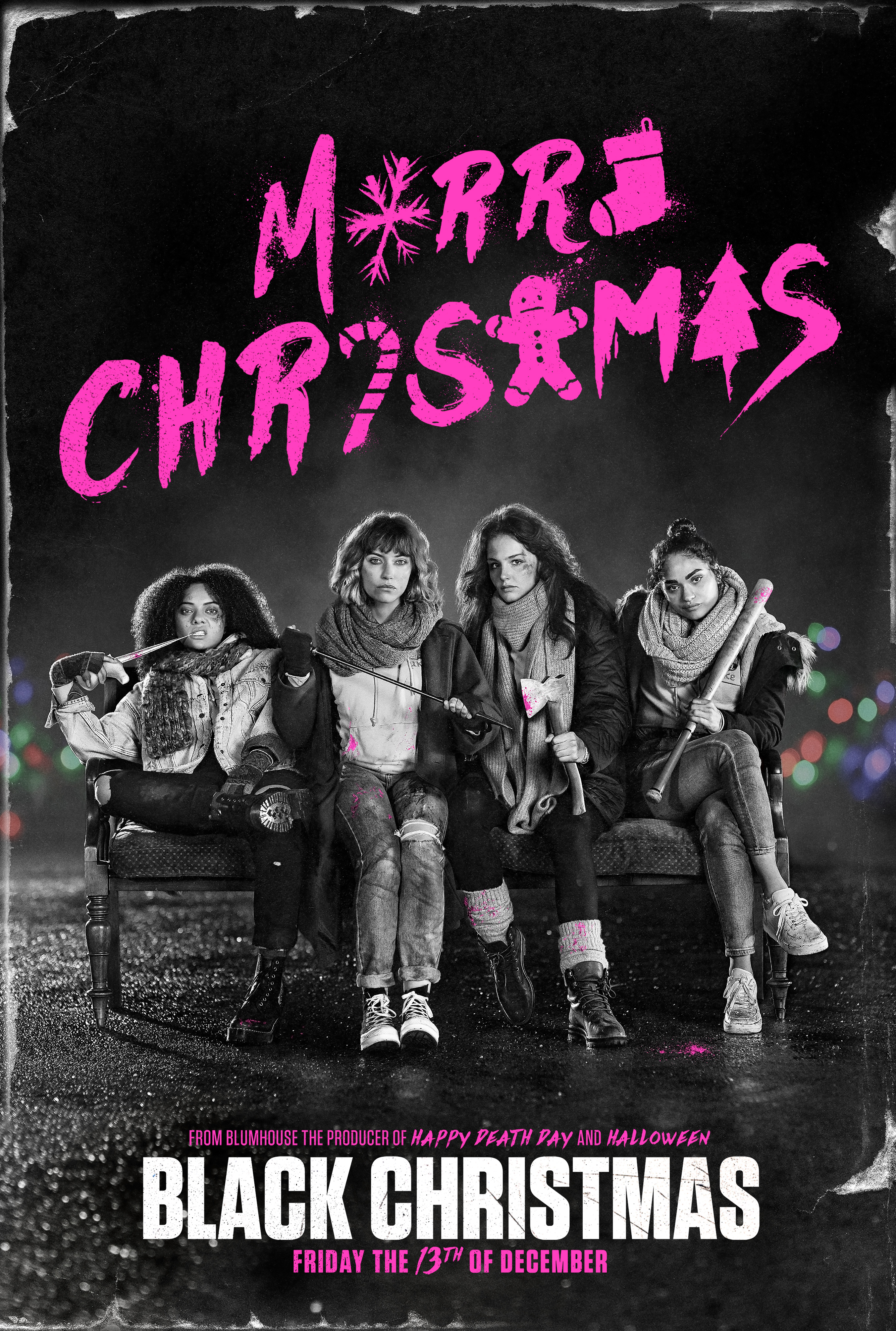
Black Christmas - Released 13 December 2019 

Image result for black christmas poster imdbOn the other end of the spectrum, here’s a remake of a remake of a horror film. Already off to a bad start. And even though I’ve not seen the 1974 original or the critically panned 2006 remake, I’m not sure anything could have possibly prepared me for the disaster that this film ended up being. Easily one of the most smug and self-satisfied films I saw all year, Black Christmas is not too far removed from Wild Rose in the sense that the director, in this case Sophia Takal, seems to have no idea what the central theme of her own film even is. I almost pity the actors who were obviously too scared to question Takal’s dreadful direction and writing. And I blame Takal for this entirely. After all, she dug herself this hole when she called Black Christmas a ‘fiercely feminist film’, a statement that makes me question whether Takal has any grasp whatsoever on what feminism even is, especially considering how the film half-heartedly flirts with themes of sexual abuse. 

This would be all well and good, if the film had any grasp on subtlety in the writing. And, make no mistake, this single handedly cripples this film from the get-go. If you’re going to discuss heavy themes in your film, sexual abuse for instance, without any subtlety and nuance in the writing it’s just going to look painfully one dimensional and as if you’re unwilling to explore these heavy ideas beyond the most basic of perspectives. And that’s the failure of Black Christmas in a nutshell. The kind of film so convinced of its own importance in the grand scheme of things, that it comes off as a pretentious and bizarrely didactic. 

What annoys me the most is that the film clearly wants to tackle these heavy themes but has no idea how and falls miserably flat on its face as a result. For example, in the first scene that sexual abuse is relevant to the text of the film, our four protagonists are on stage at a Christmas party dressed in Santa costumes, singing a cutesy song directed as a kiss off to the guy who sexually assaulted the main character. Not exactly the kind of writing that inspires a lot of intelligence, which leads back to the idea that nobody involved in the production of this film had a clue how to effectively contextualise a theme as heavy as sexual abuse. In fact, they end up making light of it. 

And the way the film ends pisses me off. Not only does everyone come back to life again having been killed by the mysterious stalker through some unknown supernatural force, that completely undercuts not only the stakes of the movie, but by introducing the supernatural into the narrative, this compromises the raw honesty and the heavy and human nature of the themes that the film clearly wants to address but, again, has no clear idea how. 

But even though the narrative might suck in every conceivable way, at least the horror itself would be easy to knock out of the park. I’m not exactly an easy person to scare, so as long as there’s some intensity to the horror scenes I was sure they would at least work. And that might be the most startling part of the film because the horror is inconsistent as hell. The first death is easily the best part of the film. The character is panicked, running around from door to door, desperately trying to find anyone who will save them. It actually has some intensity to it. The rest of the film does not. Mainly set in dull corridors with the characters plodding along, it’s alarming how the films manages to avoid being as scary as it could have been. 

It’s one of the least scary horror films I’ve ever seen, and as well as being the most misguided film I’ve ever seen, but even then it gets worse. The final moment of this film is a close up shot of our protagonist staring at a burning building of their own creation. Sound familiar? I’m almost certain it was unintentional, but the parallels to Midsommar are uncanny. But unlike that film, where the twisted horror of the narrative (that stripped away the supernatural entirely) had built up to this frightening crescendo. In Black Christmas, a film so devoid of substance this comparison hardly seems fair, this ending reads like a tired sigh. It’s the worst film of the year, probably one of the worst films of the decade, and given how a lot of people seem to agree, I think this film we can dispose of in the bins of history. Future generations would not be missing much. 

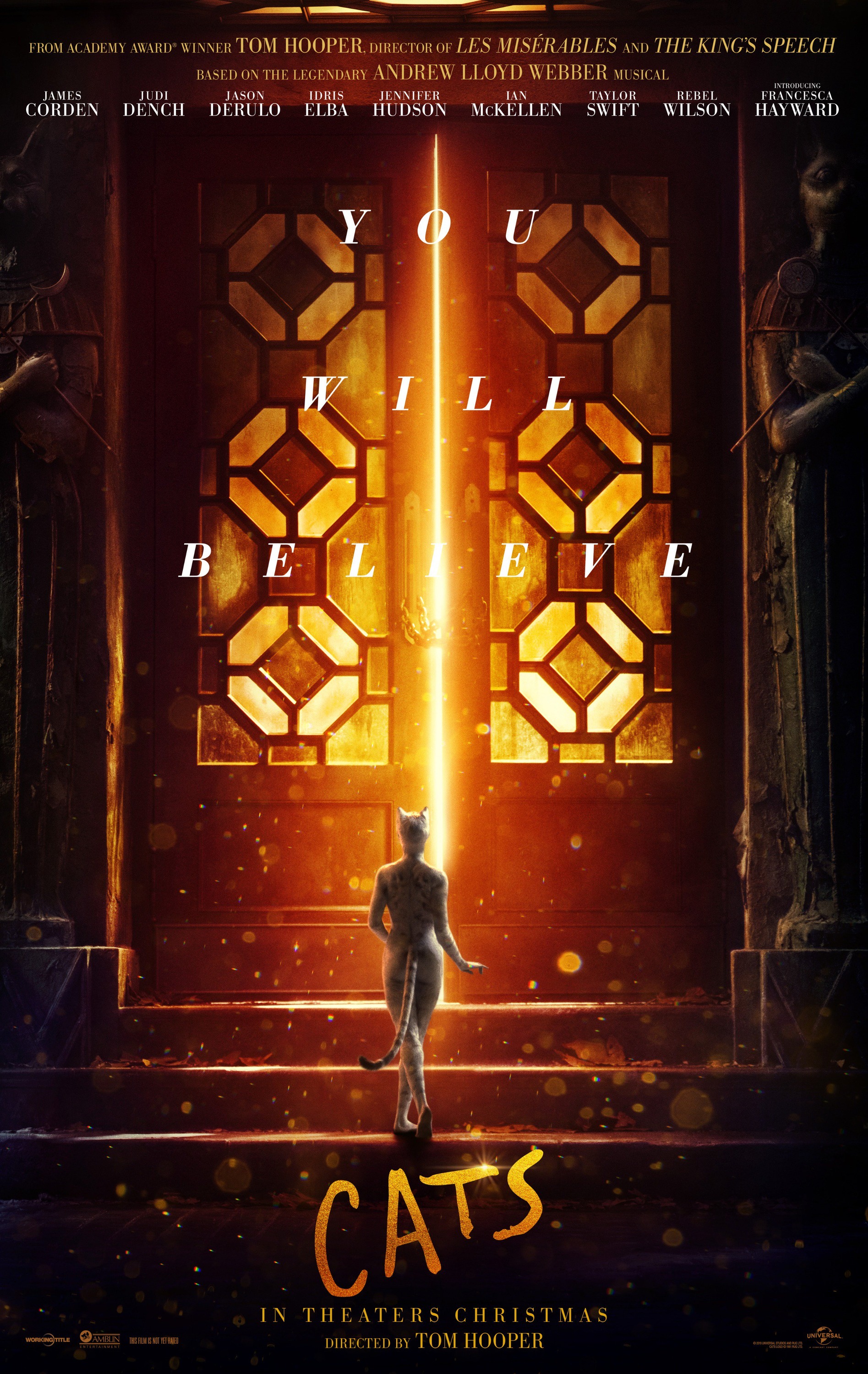
Cats – Released 20 December 2019 

Image result for cats poster imdbAs if anyone needs to be told that this film is terrible. After all, it’s been so completely and utterly demolished by critics that it’s no longer being considered for the Oscars, a fact that I find completely hilarious given the cast and the budget. Again, just like the other two films I’ve discussed, I can’t help but wonder who thought this film was a good idea. Because, as I said in my review, Cats is a film about nothing. Plain and simple. This could work on the stage, where the intimacy between the audience and the performers doesn’t make narrative substance as essential. The glamour of the big dance numbers will be enough to engage the audience. However, in film, where that intimacy is stripped away, it’s not as simple as that. The objective distance between audience and performers that is essential to film as a medium, something that film directors need to bear in mind in contrast to theatre directors, means that the big dance numbers don’t hit with the same impact, and thus a much bigger weight rests on the narrative. Of course, if you have no narrative, you’ve dug yourself a considerable hole. Cats is a bad film. What makes it an awful film is the way it seems to misunderstand film as a medium. 

It might not be the very worst film I saw this year, but it was by far the most immediately repulsive thanks to the eye-bleedingly terrifying CGI and an all-star cast doing the absolute definition of phoning it in. I was amazed walking out of the cinema that I had been in there for two hours because, even though the film felt a lot longer than it should have been, so little happens within the narrative itself that it almost paradoxically hardly felt as long as it was. 

The thing about Cats is because, while it is bad, it fails to even be bad in a way that’s interesting to discuss. It’s just soulless, terrifyingly animated, and entirely devoid of substance. And, on top of all of that, it bombed at the box office, making a tiny $6.5 million on opening weekend, making back only a fraction of its $100 budget. Let this be a lesson to the industry. The only positive I think we can all take from this is the fact that we can be confident that something like this will never happen again. Good experiment, but that’s about all you can say. 

And that’s 2019 done. Bring on 2020, I guess...